
....Because it's Grand Rounds! Head over to Polite Dissent for your weekly reading. Who knew there are so many medical references in the comics? Zoinks!

Check out the above link for more info.

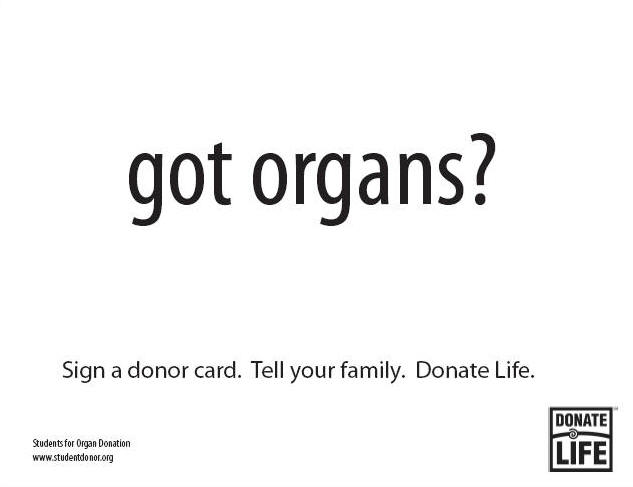
April is Organ Donor Awareness Month. You critical care nurses out there may have already seen this month's Critical Care Nurse magazine, but if you haven't, it's devoted to organ donation and it's very, very good. Check it out.
One of the discussions I've had recently is how to increase donation rates(well, not just me but the whole HRSA Collaborative.) Our neighbors to the north(Canada, for those of you who are geographically-challenged), are considering the possibility of presumed consent. This is where an individual would have to "opt-out" of being a donor on a national list or else, in the event of brain death, would be presumed to be a donor. Spain, which has the highest organ donation rate in the world uses a system of hospital-based transplant coordinators. Here in the U.S., consent must be obtained from the next of kin-who have to make this decision while their loved one is still on a ventilator, at or near brain death. Not an ideal time for a well thought out, informed consent. Many states have enacted laws for first-person consent. This means that if you document that you want to be an organ donor-on you driver's license or on a registry-it is considered informed consent and your next of kin's permission is not needed. Where I come from this has not been challenged. Most families want to honor the deceased's wishes and will agree to donation when they realize that's what they want.
Another, more controversial idea is that only people who sign up to be organ donors should get organs. I'm interested in hearing opinions on this. Should someone who wouldn't donate their organs receive one? What if they changed their minds? Something needs to change. Waiting lists are growing as technology keeps potential recipients alive. Today, 18 people will die waiting for an organ. It's an uneasy thing to consider theoretically. Now think about how you would feel if it was your spouse, your child, your parent who was brain dead. Would you donate? Recently I asked a mother of a teenager who died suddenly if she would donate her daughter's organs. She said she knew it was a good thing and she wanted to help other parents who were waiting for an organ to save their kids lives-but she couldn't see her baby "cut up". Who can blame her? This is the last decision she will ever make for her.
I personally don't care what you do with me when I die. Cut me up and bury the rest by the pound. I won't need it anymore. Let my eyes help someone see their children or a sunset. Let my skin be used for grafts for burn patients. Let my heart, lungs and liver go to someone who doesn't know from one day to the next if it's their last or their first-with a life saving organ. My kidneys, pancreas and intestines can go to someone with a debilitating disease. Take every bit of it. If you feel that way too, tell your family, write it in your living will, put it on your driver's license and tell your family again. Over 90,000 people are counting on you.


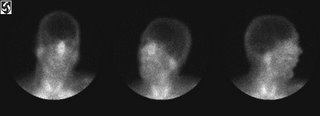
See what I mean. Maybe someday I'll write on why I hate EEG's. The picture really says it all.
At some point I'll take the family aside. I'll ask them if the patient had ever talked about his wishes, if he had a living will. I'll ask them what he or she was like. What is it like, to ask a family if they want to donate the person's organs? It ain't easy, but I think I'll have to leave that for another day.

